


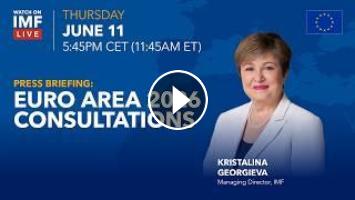
The IMF presented its staff assessment of the euro area economy on June 11, 2026. Officials described the region as resilient amid multiple shocks but facing a weaker outlook due to renewed energy price pressures from Middle East conflicts. The headline narrative of resilience masks meaningful downward revisions. The euro area is more exposed to energy volatility than larger economies like the US or China. Short-term shocks compound long-standing structural problems: population aging and subdued productivity growth. The result is slower growth, higher inflation, and tighter policy trade-offs than many observers expected even a few months ago.
- Monetary authorities (primarily the ECB) gain room to maintain credibility by keeping expectations anchored without immediate drastic tightening.
- High-debt member states benefit from any expanded fiscal flexibility (such as the Commission’s updated escape clause) if framed as temporary crisis response.
- Incumbent energy suppliers and slow reformers maintain leverage while urgency for deeper single market, capital markets union, and innovation reforms is downplayed.
The real winners from honest action are households and firms that would gain from higher productivity, lower energy dependence, and sustainable public finances.
Vulnerable households face higher energy bills and slower wage growth in a low-confidence environment. Firms, especially smaller ones, deal with uncertainty that delays investment. Over time, this risks higher inequality, weaker social cohesion, and reduced capacity to fund health, education, and green transitions, areas central to the 2030 Agenda’s integrated approach (SDGs 7, 8, 10, 13).
The euro area has absorbed successive shocks remarkably well. Financial systems have held up. Inflation expectations remain anchored for now. The US and Chinese economies continue to provide a partial global buffer. Targeted safety-net spending and clear ECB communication can cushion the blow without derailing stability. Over-reaction on fiscal loosening could itself become the bigger long-term risk for high-debt countries.
A decent response protects people today while refusing to mortgage the future. Prioritize temporary, well-targeted support for vulnerable groups. Maintain monetary focus on inflation expectations. Use any fiscal space carefully and begin (or accelerate) structural work on energy security, renewables, single market completion, and productivity-enhancing reforms.
Smallest first step: Track the three variables Georgieva highlighted, commodity prices, inflation expectations, and financial conditions, and adjust policy stance as data evolve rather than on hopes the shock fades quickly.
This briefing reinforces a core mechanism truth visible across the 2030 Agenda documents you shared: declarations and goals matter far less than delivery mechanisms that balance short-term relief with long-term resilience. Without the latter, repeated shocks will continue to erode progress on poverty, inequality, and planetary boundaries.
Sources
- Press Briefing: 2026 Euro Area Consultations (YouTube, IMF channel, June 11, 2026): https://www.youtube.com/watch?v=_R1zFh5_Go4
- Transforming our world: the 2030 Agenda for Sustainable Development (A/RES/70/1, 2015)

Up Next
-
38:25

Venezuela, UN Peacekeeping & other topics - Daily Press Briefing (5 January 2026) | United Nations
-
29:24
Iran, Lebanon & other topics - Daily Press Briefing (30 April 2026) | United Nations
-
14:19
Sudan/South Sudan: Increasing Insecurity in and Around the Border Area- Briefing | United Nations
-
Lebanon, Peacekeeping & other topics - Daily Press Briefing (17 June 2026) | United Nations
-
24:38
Myanmar, Palestine & other topics - Daily Press Briefing (1 May 2026) | United Nations
-
Press Briefing: Fiscal Monitor - April 2026
-
18:51
Lebanon, Israel, Palestine & other topics - Daily Press Briefing (4 May 2026) | United Nations
-
Lebanon, Gaza & other topics - Daily Press Briefing (16 June 2026) | United Nations
-
27:17
Lebanon, UAE, Sudan & other topics - Daily Press Briefing (5 May 2026) | United Nations
-
38:01
Press Briefing by Press Secretary Karoline Leavitt and the Vice President, Jan. 8, 2026
-
00:16

How to Implement Stoicism in Self Care
-
02:08
Unleashing Your Potential The Power of Self-Development
-
01:00

Prioritize You: Mental Health and Self-Care
-
03:00

Personal Development vs Magical Growth | #magic #occult
-
00:16

Perpetual Self-Improvement #personalgrowth #selfgrowth #continuouslearning #personaldevelopment
-
00:07

How to Use Personal Development to Improve Your Life #personaldevelopment #businessowner #growth
-
00:11
Personal Development | Motivational Facts #131
-
16:31

Building Confidence & Self Esteem as An Introvert || Personal Development
-
00:14
Jim Rohn - Income does not far exceed personal development
-
01:19

Andy Britnell Personal Development Videos - putting on a successful presentation
 Loading...