


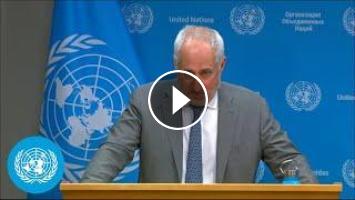
The United Nations holds daily press briefings to update the world on crises, peacekeeping, and humanitarian work. The May 5, 2026 briefing focused on escalating violence in Lebanon, humanitarian needs there and in Gaza, Sudan, and other hotspots.
These briefings describe immediate symptoms, exchanges of fire, displaced families, food insecurity, but rarely connect them to the structural failures in the 2030 Agenda for Sustainable Development. The 17 integrated Goals meant to end poverty, protect the planet, and build peace. Yet the briefing shows the same cycles of conflict and need that the Agenda promised to break by 2030.
The current UN system, with its six Main Committees and peacekeeping mandates (as detailed in the 2004 historical note), routes most issues through political negotiations among member states. This setup gives veto power or influence to states and non-state actors who benefit from the status quo. In Lebanon, for example, the briefing references resolutions 1701 and 1559, which call for disarmament of militias and state monopoly on force, commitments that remain unfulfilled more than a decade into the SDG era. Humanitarian aid flows, but the underlying power arrangements that produce repeated crises stay intact.
Concrete numbers from the briefing make this plain:
- Nearly a quarter of Lebanon's population faces acute food insecurity.
- Over 1 million displaced.
- Thousands killed or injured, including children.
- Aid reaches some (meals, water, cash transfers), but infrastructure damage and access limits compound suffering.
This directly undermines SDG 1 (No Poverty), SDG 2 (Zero Hunger), SDG 3 (Good Health), SDG 16 (Peace, Justice and Strong Institutions), and others. People pay in lost lives, repeated displacement, and eroded dignity while the system recycles the same reports.
The strongest counter-view is that the UN cannot impose outcomes on sovereign states or non-state armed groups. Peacekeeping missions like UNIFIL operate with limited mandates and resources. Progress on the SDGs requires political will that member states must generate themselves. The Agenda itself is not a binding treaty with enforcement teeth; it is a shared framework of ambition. Without that will, even the best mechanisms stall.
A decent response starts with honest accounting. Read the full 2030 Agenda text (A/RES/70/1) alongside daily briefings. Track how often the same flashpoints appear year after year. The smallest first step for practitioners is to insist that every policy discussion names the specific SDG targets at risk and the concrete institutional barriers blocking them, not just the symptoms. This builds pressure for the structural changes the Agenda requires but has not yet delivered.
Sources
- A/RES/70/1, Transforming our world: the 2030 Agenda for Sustainable Development (adopted 25 September 2015): https://sdgs.un.org/2030agenda
- Historical and analytical note on Main Committees (A/58/CRP.5, 10 March 2004).
- UN Daily Press Briefing, 5 May 2026 (YouTube, full transcript and highlights available via UN channel).
Full Highlights: https://www.un.org/sg/en/content/noon-briefing-highlight?date=2026-05-05

Up Next
-
26:55

Haiti, Lebanon & other topics - Daily Press Briefing (23 April 2026) | United Nations
-
Sudan, Lebanon, Ebola & other topics - Daily Press Briefing (18 June 2026) | United Nations
-
29:24
Iran, Lebanon & other topics - Daily Press Briefing (30 April 2026) | United Nations
-
Lebanon, Gaza & other topics - Daily Press Briefing (16 June 2026) | United Nations
-
18:51
Lebanon, Israel, Palestine & other topics - Daily Press Briefing (4 May 2026) | United Nations
-
26:19
Venezuela, Sudan, Lebanon/Israel & other topics - Daily Press Briefing (6 Jan 2026) | United Nations
-
Lebanon, Peacekeeping & other topics - Daily Press Briefing (17 June 2026) | United Nations
-
Ukraine, Lebanon & other topics - Daily Press Briefing (12 June 2026) | United Nations
-
23:58
Lebanon, Palestine, UN80 & other topics - Daily Press Briefing (24 April 2026) | United Nations
-
26:55
Non-Proliferation, Lebanon & other topics - Daily Press Briefing (27 April 2026) | United Nations
-
00:16

How to Implement Stoicism in Self Care
-
02:08
Unleashing Your Potential The Power of Self-Development
-
01:00

Prioritize You: Mental Health and Self-Care
-
03:00

Personal Development vs Magical Growth | #magic #occult
-
00:16
Perpetual Self-Improvement #personalgrowth #selfgrowth #continuouslearning #personaldevelopment
-
00:07

How to Use Personal Development to Improve Your Life #personaldevelopment #businessowner #growth
-
00:11
Personal Development | Motivational Facts #131
-
16:31

Building Confidence & Self Esteem as An Introvert || Personal Development
-
00:14
Jim Rohn - Income does not far exceed personal development
-
01:19
Andy Britnell Personal Development Videos - putting on a successful presentation
 Loading...