


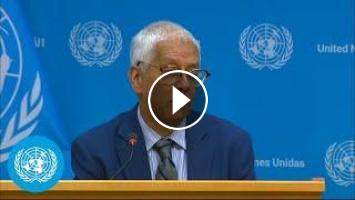
The briefing by Farhan Haq, Deputy Spokesperson for the Secretary-General covered the current humanitarian and political developments. It follows the UN's regular format for updating member states and the public on crises. The briefing presents updates on active conflicts and humanitarian needs: political shifts in Myanmar, civilian impacts in Gaza and the West Bank, aid delivery in Ukraine, and crises in Cuba and Venezuela.
It highlights immediate operational responses (aid convoys, cash assistance, funding appeals) while stressing legal protections and calls for dialogue. These are routine updates that reflect the UN's role in monitoring, coordinating aid, and urging compliance with international norms. The UN Secretariat acts as information conduit and coordinator. It relies on member states for funding, access, and political will. Key actors include:
- ASEAN and UN Special Envoy (Myanmar).
- Israeli authorities and humanitarian actors (Palestine).
- Local authorities and partners (Ukraine).
- National governments (Cuba, Venezuela).
Value flows from donor contributions and field access to affected populations. Chokepoints are restrictions on aid entry, funding shortfalls, and lack of political agreements.
- Myanmar: Arbitrary detentions block credible politics; civilians bear violence and instability.
- Occupied Palestinian Territory: Civilian casualties from strikes; damaged schools; sewage overflow (40,000 cubic meters daily untreated); evictions affecting families and children; malnutrition risks.
- Ukraine: Civilian deaths/injuries (at least 2 killed, 58 injured in one day); damaged homes, schools, infrastructure; displacement of hundreds including children.
- Cuba: Post-hurricane and energy crisis delays surgeries (over 96,000 patients, including 11,000 children), disrupts dialysis/incubators, and limits food/water services.
- Venezuela: Water system collapse after earthquake affects 640,000 people; rising disease risks (hepatitis B, diarrhea) for vulnerable groups.
The UN can deliver targeted aid and document needs but lacks enforcement power over sovereign states or armed actors. Progress depends on member state cooperation, which often lags due to competing interests. Funding gaps (e.g., only ~25% secured for Cuba) limit scale.
A decent response starts with verifiable facts and targeted support. Policymakers and practitioners can:
- Review full highlights for context: https://www.un.org/sg/en/content/noon-briefing-highlight?date=2026-05-01.
- Support or monitor specific appeals (e.g., Cuba's $94M plan).
- Push for unimpeded humanitarian access in their spheres of influence.
The briefing reinforces the UN's monitoring role but shows the gap between stated principles and on-ground delivery. No one mechanism fixes fragmented crises; sustained pressure on access and funding does incremental good.
Sources
- "Myanmar, Palestine & other topics - Daily Press Briefing (1 May 2026)": https://www.youtube.com/watch?v=zbNxk3zGYGQ
- Full highlights text: https://www.un.org/sg/en/content/noon-briefing-highlight?date=2026-05-01
Full Highlights: https://www.un.org/sg/en/content/noon-briefing-highlight?date=2026-05-01

Up Next
-
31:24

Palestine, Lebanon & other topics - Daily Press Briefing | United Nations
-
23:58
Lebanon, Palestine, UN80 & other topics - Daily Press Briefing (24 April 2026) | United Nations
-
23:26
Palestine, Sudan, Somalia & other topics - Daily Press Briefing | United Nations
-
17:46
Palestine, LebanonIsrael & other topics - Daily Press Briefing | United Nations
-
31:39
Palestine, Sudan, Syria & other topics - Daily Press Briefing | United Nations
-
26:56
Palestine, Lebanon, Ukraine & other topics - Daily Press Briefing | United Nations
-
26:43
Cop30, Palestine, Lebanon & other topics - Daily Press Briefing (17 Nov 2025) | United Nations
-
13:54
Palestine, Colonialism & other topics - Daily Press Briefing | United Nations
-
18:51
Lebanon, Israel, Palestine & other topics - Daily Press Briefing (4 May 2026) | United Nations
-
27:18
Myanmar, Sudan, Ukraine & other topics - Daily Press Briefing (6 June 2024) | United Nations
-
00:16

How to Implement Stoicism in Self Care
-
02:08
Unleashing Your Potential The Power of Self-Development
-
01:00

Prioritize You: Mental Health and Self-Care
-
03:00

Personal Development vs Magical Growth | #magic #occult
-
00:16
Perpetual Self-Improvement #personalgrowth #selfgrowth #continuouslearning #personaldevelopment
-
00:07
How to Use Personal Development to Improve Your Life #personaldevelopment #businessowner #growth
-
00:11
Personal Development | Motivational Facts #131
-
16:31
Building Confidence & Self Esteem as An Introvert || Personal Development
-
00:14
Jim Rohn - Income does not far exceed personal development
-
01:19
Andy Britnell Personal Development Videos - putting on a successful presentation
 Loading...