


The United Nations Security Council held an emergency meeting after the United States conducted a military operation in Caracas, Venezuela, on or around January 3, 2026. US forces targeted and removed President Nicolás Maduro and his wife Cilia Flores, who face long-standing US indictments related to narco-terrorism. The US described it as a targeted law enforcement action against indicted fugitives. UN officials and many member states called it a violation of sovereignty and international law.
The UN Charter and customary international law emphasize state sovereignty, territorial integrity, and the prohibition on the use of force except in self-defense or with Security Council authorization. The US framed the raid as enforcement of criminal indictments, not regime change or occupation. Venezuela and allies like Russia and Colombia called it kidnapping, bombing, and neo-colonial resource grab. Both sides highlight real issues: Venezuela's governance failures, drug trafficking, and regional instability versus unilateral military action bypassing standard legal and diplomatic routes.
The mechanism at work is the tension between enforcement of domestic law against foreign leaders and the post-WWII order built around sovereign equality.
- US position: Control over the Western Hemisphere's largest oil reserves, countering influence from Iran, Hezbollah, Cuban intelligence, and criminal networks. The operation protects US national security interests and responds to decades of indictments.
- Venezuela and allies (Russia, China, others): Defend norms against precedent-setting interventions. They frame it as great-power overreach that threatens any state's leadership.
- UN Secretariat: Pushes de-escalation, dialogue, and legal tools for narcotics, resources, and human rights without endorsing unilateral force.
Venezuela has faced years of economic collapse, mass emigration, disputed elections (notably July 2024), and human rights concerns documented by the UN. The raid added immediate casualties, infrastructure damage, a national emergency decree, and uncertainty for civilians. Long-term, such actions risk wider instability, refugee flows, and eroded trust in international rules that aim to limit force.
The strongest counter to criticism of the US action is the documented dysfunction in Venezuela: rigged or opaque elections, ties to designated terrorist and criminal networks, and suffering imposed on its own population. Traditional legal avenues (extradition, sanctions, ICC) have not resolved the situation after years. Proponents argue that waiting for perfect multilateral consensus allows safe havens for threats. Critics counter that the cure risks broader erosion of the very rules that prevent larger conflicts. Both views have weight depending on whether one prioritizes immediate threat removal or long-term systemic stability.
A decent response starts with clear mechanisms: verify facts on casualties and current control in Venezuela, push for transparent accounting of any transition, and support inclusive dialogue that includes Venezuelan voices beyond the old regime. The smallest practical step is demanding full publication of 2024 election results and independent verification of any post-operation governance arrangements. Principles matter more than any single leader or administration.
Sources
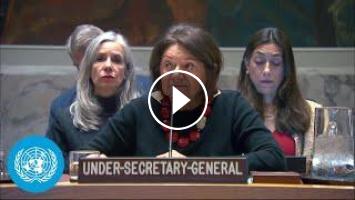
- "Venezuela: UN Chief Urges Respect for UN Charter & Sovereignty - Briefing | United Nations" (full description and partial transcript): https://www.youtube.com/watch?v=1AmQC8o9reI
To watch full meeting in all UN official languages, please visit: https://webtv.un.org/en/asset/k1k/k1kem3z5nm

Up Next
-
23:37

Venezuela, UN Charter Day & other topics - Daily Press Briefing (26 June 2026) | United Nations
-
09:55
Venezuela - U.S Tensions Escalate: 'dialogue is the only viable path' - Briefing | United Nations
-
38:25
Venezuela, UN Peacekeeping & other topics - Daily Press Briefing (5 January 2026) | United Nations
-
00:53
#Venezuela: Threats to International Peace and Security - UN Chief Briefing
-
15:47
Venezuela, Lebanon & other topics - Daily Press Briefing (7 July 2026) | United Nations
-
16:54
Venezuela, Syria & other topics - Daily Press Briefing (7 January 2026) | United Nations
-
00:45
UN Chief: Respect Ukraine's Sovereignty | United Nations
-
01:25
Gaza: WHO Chief Urges Safety for Aid Workers After World Central Kitchen Tragedy | United Nations
-
06:47
UN Charter at 81: A Call for Global Cooperation Over Chaos - UN Chief | United Nations
-
00:51
Gaza Crisis: UN Chief Urges Immediate Action After 196 Aid Workers Killed | United Nations
-
06:24

Netherlands vs Japan Predictions ???? FIFA World Cup 2026 Betting Preview
 Loading...