


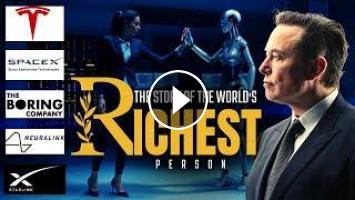
Everyone says Elon Musk built his fortune by betting on the future. He turned early internet mapping software (Zip2) and online payments (PayPal) into cash, then poured it into Tesla (electric vehicles), SpaceX (rockets and satellites), and newer bets like Neuralink, The Boring Company, and xAI. The story celebrates him as proof that bold risk-taking on technology solves big problems: cleaner transport, cheaper space access, and human expansion beyond Earth.
That story is incomplete. Musk’s wealth grew fastest through ownership stakes in companies that scaled with massive public incentives, stock market enthusiasm, and regulatory credits, not pure private genius alone. Tesla benefited heavily from EV tax credits, regulatory credits for emissions, and clean-energy subsidies. SpaceX won large government contracts. Much of the fortune sits in unsold stock; unrealized gains face low or deferred taxes. Tesla reported strong profits in recent years but paid federal income tax at a fraction of the statutory rate.
The narrative of solo disruption overlooks how public policy and collective infrastructure enabled the growth.
Who benefits when the surface story stays intact? Musk and early investors capture enormous value from companies that align with long-term trends (energy transition, connectivity, exploration). Governments gain technological edge and visible progress on climate and infrastructure goals. Traditional industries face disruption. Critics note that concentrated ownership amplifies influence over policy debates, media (via X), and future tech standards. The structure rewards founders who can attract capital and talent at scale while deferring tax realization.
Concrete impacts vary. Tesla accelerated electric vehicle adoption and battery cost declines, which supports cleaner air in cities and progress toward emissions goals. SpaceX lowered launch costs and expanded satellite internet, potentially aiding connectivity in underserved areas. Yet critics highlight inequality: Musk’s wealth grew dramatically while paying relatively low effective taxes in some periods, contributing to debates over public revenue for social needs. Rocket launches emit pollutants, and private jet use places high emitters in the top tier of personal carbon footprints. Supply chains and manufacturing bring local labor and environmental pressures.
Basic needs (food, water, shelter, healthcare, safety) remain unmet for many while capital concentrates. The 2030 Agenda preamble and Goals 1, 10, and 13 frame these tensions directly: end poverty and inequality while protecting the planet.
Musk’s approach produced real delivery on hard technical problems where governments and legacy firms moved slower. Tesla helped normalize EVs and renewable integration. SpaceX demonstrated reusable rockets and rapid iteration. These outcomes advance elements of Goals 7 (affordable clean energy), 9 (innovation and infrastructure), and 13 (climate action), even if imperfectly. Dismissing the results because of wealth concentration or personal politics risks ignoring measurable shifts in technology cost curves and deployment speed. No alternative actor matched the same combination of capital allocation, execution, and public narrative at this scale.
A decent person weighs results against mechanisms. Musk’s path shows how concentrated ownership and bold execution can accelerate specific technologies that align with sustainable development targets. It also shows limits: markets and incentives alone do not automatically solve distribution, basic needs, or governance gaps in the full 2030 Agenda. Policymakers and practitioners should study the delivery mechanisms (long-term ownership, iteration under pressure, integration of hardware/software/energy) and adapt them where they fit public priorities.
Smallest first step: Map specific Musk-company outputs (battery cost declines, launch cadence, renewable integration examples) against national SDG indicators in your context. Separate the announced vision from deployed results and perishable stock valuations. Track what scales reliably versus what depends on unique founder dynamics.
Sources (updated June 13, 2026)
- A/RES/70/1, Transforming our world: the 2030 Agenda for Sustainable Development (adopted 25 September 2015): https://sdgs.un.org/2030agenda (accessed via provided documents and official site).
- Department of Economic and Social Affairs pages on the 17 Goals and history: https://sdgs.un.org/ .
- Oxfam America on Musk wealth and Tesla tax: https://www.oxfamamerica.org/explore/issues/economic-justice/how-did-elon-musk-make-his-money/.
- Various biographical summaries and company impacts from public sources (YouTube video context aligns with standard accounts of Zip2, PayPal, Tesla, SpaceX trajectory).
Don't forget to the support the youtube content creator.
- Category
- Elon Musk
- Tags
- Elon Musk, elon musk interview, elon musk booed, 2030 Agenda, SDGs, Tesla, SpaceX, sustainable technology, wealth mechanisms, inequality

Up Next
-
30:31

Full Interview: Maye Musk, Mother Of Elon Musk, Talks About Her Extraordinary Life
-
1:00:40
Elon Musk's Secret Path to Becoming World's Richest Man Methods used
-
46:00
Journey of Elon Musk - Making the Impossible Possible l Biography Of ELON MUSK
-
21:41
Inside Elon Musk’s Texas Ranch – The Genius Life Behind Rockets, Wealth, and Chaos
-
3:10:51
Elon Musk Live | Trump Picks Musk To 'Slash Bureaucracy' With Department Of Government Efficiency
-
01:28
ECOSOC Youth Forum 2024: Empowering Youth to Achieve the 2030 Agenda | News Flash | United Nations
-
1:02:12
Errol Musk Interview on Elon Musk ‘DOGE’ Appointment By Trump & More | Global News Today 11/13/24
-
40:17
Launch of the SDG Report 2026, review of the 2030 agenda - Press Conference | United Nations
-
34:18
A Conversation with Elon Musk
-
40:51
Elon Musk: The future we're building -- and boring | TED
-
06:24

Netherlands vs Japan Predictions ???? FIFA World Cup 2026 Betting Preview
 Loading...